
How to get started in Aeromodelling
Getting started with radio-controlled (RC) planes is an exciting hobby that’s fun and rewarding. It might look tricky at first, but with some patience and practice, anyone can learn to fly. Many beginners are surprised by how quickly they improve—some are confidently flying on their own after just a few weeks.
Flying an RC plane isn’t something you can just pick up straight away. It takes time to build the skill. You need to learn how to control the plane without thinking too much about what your hands are doing. This becomes easier the more you practise. Slower planes, like gliders, are great for learning. They fly gently and give you time to react. Faster sport or aerobatic planes are more advanced and need quick thinking and sharp focus.
RC flying is different from flying a full-size aircraft. You don’t sit in the plane, so the only way to control it is by watching carefully. The tricky part is that the controls feel different depending on which way the plane is facing or whether it’s flying upside down.
The best way to learn is to join a local RC flying club. Clubs have experienced instructors who can guide you through each step. They’ll help you build your confidence and avoid expensive mistakes. With the right help, you’ll be flying like a pro in no time.
What model types do we fly at TMAC?
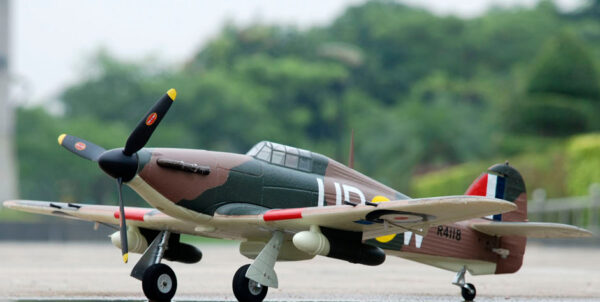
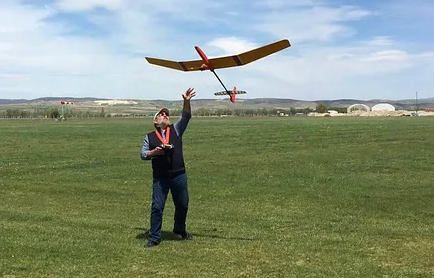

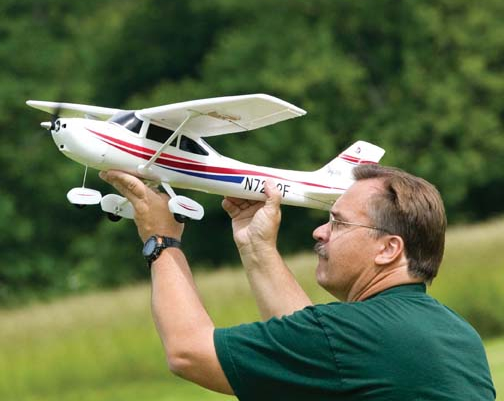
| Control Line Two wires are connected to the model to control the vital control surfaces while the model flies around in a circle. There are aerobatic, speed and team racing competition classes. | Powered RC Models The range of powered models is vast, including sport, scales, aerobatic, 3-D and pylon racers… equally as diverse is the power systems, from gas to glow to electric. | Gliders & Sailplanes Sailplanes range in size from under a metre to 7 or more! They are launched from a hillside, flat field by winch or electric motor in the nose, or even hand launched.. The pilot then flies in search of lift to extend the flight. |
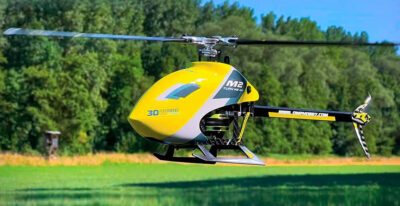
| Helicopters Helicopters can be incredibly challenging to fly, just like the real thing! They are available as kits through to Ready To Fly options. | Vintage The models are usually built from plans with balsa and ply and covered in light weight materials like silk or tissue, powered by glow, diesel or electric motors. Can be radio controlled or free flight. | Multicopters Multicopters, commonly referred to as Drones, are a relatively new facet of the hobby. MFNZ supports many clubs racing FPV multicopters, its incredibly fast and requires super human reactions to pilot them around tight courses. |
| Park Flyers This more recent branch of aeromodeling consists of electric powered, radio control models which are small, light and safe enough to be flown in parks and fields. If you do fly in parks, be aware of other park users and you should check the local authority bylaws on using parks. | Indoor These are usually slow, light models made of materials such as Depron, foam, balsa and film. Powered by electric motors, Co2 or rubber, and can be flown by radio control in the confined spaces of a hall or gymnasium. |
Why would I need an instructor?
Advances in technology have made learning to fly much easier than it was 20 years ago, but if you want to really get into the hobby and develop good habits from the start, nothing beats learning from someone who knows. The club has instructors covering fixed wing aircraft (powered and gliders). If you wish to receive flight training contact our instructors by:
- Emailing our instructors at taurangamodelfly@gmail.com with your contact details and what type of model(s) you are interested in flying and someone will be in touch.
- Visit us at the field on a club flying day, or;
- Come along to one of our club meetings
The instructor will provide guidance on:
Choice of Model – size, configuration, electric or internal combustion.
Choice of Radio System – There are 2 main control configurations known as “mode 1” and “mode 2”. There is no advantage of one system over another. In the US mode 2 is favoured, whereas in Europe the preference is for mode 1. In NZ and Australia the mix is balanced. In the Tauranga Club, the dominant mode is mode 1. Most students follow the system used by their instructor, but once you have learned one system, it is generally locked in for life. Some radio systems can be converted from one mode to another – some cannot.
Please bear this in mind if you have a sudden impulse to buy a system from Trademe!
How to set up and trim your model. An untrimmed model is hard to fly and may be unflyable.
Starting process. Safety with electrics, starting and tuning an IC motor.
What is the wings test and do I need it?
This is a Civil Aviation requirement and is administered by the club on behalf of Model Flying New Zealand. Members holding a wings badge (or learners flying under the guidance of a certified instructor) are covered by a comprehensive third-party liability insurance, in the event that your model hits something.
What training aids can help me?
- Buddy Box trainer leads – this is currently the preferred way to train. Most transmitters have a facility where 2 transmitters can be paired together such that an instructor can take over from the student at any stage. This enables a structured learning process where in the early stages the instructor takes off and lands the model and the student takes over once airborne. As the student’s skills develop, the instructor can provide more access for the student.
- Simulator – there are a number of good computer simulators available. The student’s transmitter is connected to the computer by a lead plugged into the buddy port. The main purpose of the simulator is to develop instinctive coordination skills Most simulators provide a range of models so that the student can progress from a stable trainer to a more aerobatic design as his/her skills develop.
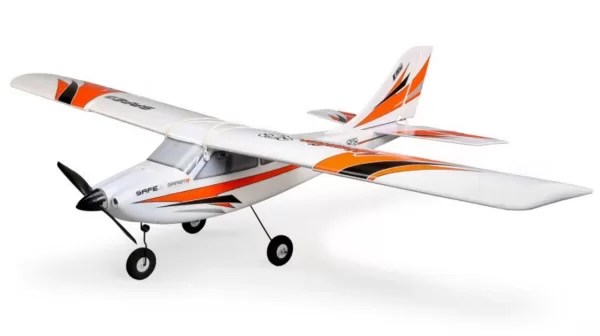
- SAFE Technology – S.A.F.E technology or (Sensor Assisted Flight Envelope) came about in 2013 developed by the good folks at Horizon Hobby who essentially wanted to help or assist inexperienced RC pilots gain confidence when flying. The first time we saw SAFE it was partnered with a re-release of arguably the most popular training plane ever sold – The E-flite apprentice. This was an absolute game-changer and revolutionized the way we look at the world of trainer aircrafts. Now you can get many different safe models such as cubs and even jets.
The MFNZ Wings Badge – More Information
From Jan 2012 it became mandatory, if flying solo, to have your wings badge.
If you do not have a Wings badge you will need to fly “under supervision” of an Instructor or Wings badge holder.
If you do not have a wings badge and are flying unsupervised you will NOT be covered by MFNZ insurance.
You will also be contravening the rules of the Tauranga Model Aircraft Club as well as putting pressure on wings badge holders to be constantly supervising members.
- If you don’t have it, please make every effort to do your Wings badge.
- It is YOUR responsibility to contact one of the Instructors / Wings badge testers and get it sorted.
- We do not want to have to discipline members who flaunt this rule as it just makes it unpleasant for all. It is much easier to do the test.
- If you don’t feel that you are competent to do the test, you need to actively seek assistance.
To arrange for instruction please contact the Chief Flying Instructor

Model Flying New Zealand Wings is a proficiency program ensuring our members are competent and safe!
Wings is broken down into 11 disciplines, 6 basic and 5 advanced, and 4 specialist endorsements, as well as Observer Training. Our Wings program is accepted by the Civil Aviation Authority as the qualification needed to operate within 4km of an aerodrome as per CAR101.205
Wings is only valid for recreational use, commercial use of the qualification is strictly forbidden and invalidates its use as well as jeopardising membership.
The qualification will be valid for a 5 year period (phased in from 2025) and is composed of both theory and flight test, administered by Model Flying New Zealand Wings Examiners.
The Wings badge has 3 components.
1. Answering questions relating to safe operation of model aeroplanes – understanding rigging, trim, starting procedures, preflight checks etc.
2. Demonstrating an understanding of club and CAA rules.
3. Demonstrating competence in flying a model aircraft
(A list of standard “wings test” questions and model answers is available from the club secretary)
 Tauranga Model Aircraft Club Inc.